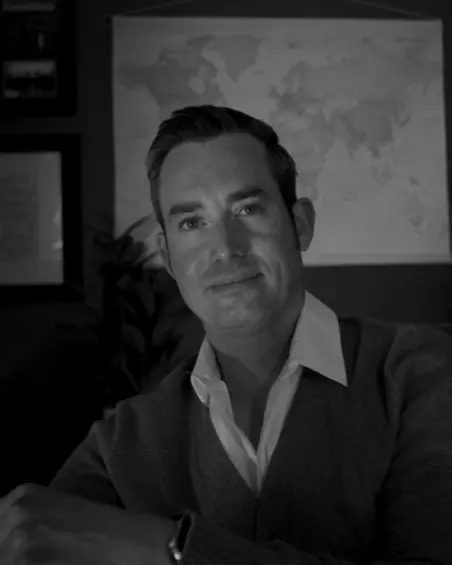
Atwell Francisco Guy
Directing research in machine affect and metacognition, runtime-controlled autonomous agent architectures, and local-first inference at the Autonomous Systems & Machine Cognition Laboratory, the research division of Black Dagger LLC. Methods and results are released publicly as preprints and technical reports when they are ready; preprints and papers are listed here only once they carry a public identifier.
Advancing fundamental sciences through causal and agentic intelligence.
Today's frontier models are trained with reinforcement learning to reason before they answer, and the length of task, in human working time, that an agent can complete on its own with 50% reliability has doubled roughly every three months since 2024 by METR's measure [19]. What still fails in practice is what Stanford's Emerging Technology Review 2026 lists for agents: limited memory, goal drift, infinite loops, resource exhaustion, and weak interoperability [1]. Those failure modes, and the affective and control machinery that might fix them, are this laboratory's subject. Bracketed numbers refer to the references at the end of this page.
Under Atwell Francisco Guy's direction, the Autonomous Systems & Machine Cognition Laboratory treats autonomous agentic systems not as conversational products, but as rigorous computational instruments for scientific discovery. The laboratory formulates architectures capable of navigating complex experimental search spaces—spanning treatment-effect estimation in clinical data, topological and causal structure in high-dimensional data, RF signal classification, and market dynamics.
“True scientific autonomy cannot remain an echo chamber of internet tokens. We engineer autonomous agentic systems that hold persistent state, reason causally across unforgiving empirical sciences, and systematically explore the boundary between lived human consciousness and machine-synthesized reality.”
— Atwell Francisco Guy, Principal InvestigatorASMC Lab is the research division of Black Dagger LLC, a veteran-owned company, and works with full editorial independence over what it studies and publishes. Methods, code, and results are released publicly when work reaches preprint stage, and investigations are held to reproducibility on public benchmarks wherever one exists.
The program unites two primary disciplines, machine affect and metacognition, and runtime-controlled agent architectures on local hardware, with five application domains where those methods are exercised against real data.
Two primary disciplines, five application domains.
The ASMC Laboratory conducts empirical and theoretical investigations where mathematical rigor and real-world verifiability are paramount. Two disciplines are primary. The other five are application domains where those methods are exercised against real data.
Machine Affect & Metacognition in Autonomous Agents
Treating affect as a control signal rather than a conversational mask, and metacognition as a measurable property of an agent's decisions.
- Functional emotion concepts as control signals, building on Anthropic's 2026 finding that internal emotion-concept representations causally influence model behavior [3]
- Homeostatic drives (curiosity, urgency, confidence, caution) in the homeostatic reinforcement learning tradition [6]
- Our own synthesis: Scherer's appraisal checks [4] driving a dimensional valence-arousal-dominance state [5]. The two theory families are distinct; we combine them deliberately
- Goal drift measured on the Arike et al. 2025 benchmark [2]; metacognitive calibration and introspection [12]
Runtime-Controlled Agent Architectures on Local Hardware
Orchestrator–worker agents whose every tool call passes a runtime policy check, executing entirely on unified-memory Apple silicon. These runtime controls are distinct from training-time alignment such as Constitutional AI [25].
- Orchestrator–worker, ReAct, and Reflexion loops with persistent agent memory [16]
- Runtime policy enforcement in the reference-monitor and shielding lineage [17][18], following CaMeL and AgentSpec [13][14]
- Long-horizon evaluation against public agent benchmarks and METR's time-horizon method [19]
- Local inference with MLX and llama.cpp on M-series GPUs, including the M5 Neural Accelerators
Treatment-Effect Estimation from Longitudinal Clinical Data
One niche, done locally: estimating treatment effects from longitudinal intensive-care-style telemetry with target trial emulation [21] and invariant causal prediction [20], designed to run on hardware inside the institution so records never leave it.
- Target trial emulation and structural causal models for multi-drug regimens
- Invariance-based robustness to non-random attrition and missingness
- Counterfactual patient trajectories evaluated against public critical-care datasets
- No patient data on commercial cloud APIs
Topological & Causal Data Analysis
Persistent homology and causal discovery as separate methods. Our position: topology can help diagnose structure in data, but it does not by itself identify causal structure; causal claims rest on the discovery methods below.
- Persistent homology for structure diagnosis in high-dimensional data, in the Carlsson and Edelsbrunner–Harer canon [22]
- Causal discovery benchmarked against NOTEARS and DAGMA on public data [23]
- Distribution shift and heavy-tailed data treated as separate problems
- Out of scope: automated theorem proving and formal mathematics
Specific Emitter Identification & Modulation Classification
Defensive spectrum-monitoring research on public in-phase/quadrature (I/Q) datasets: specific emitter identification, automatic modulation classification, and blind source separation under multipath fading.
- RF fingerprinting and automatic modulation classification on I/Q samples
- Topological features on delay-embedded signal representations, following PNNL's 2024 work [24]
- Blind source separation under dense multipath and interference
- Conducted under coordinated-disclosure and defensive-use guidelines
Agent-Based Computational Economics
Agent-based computational economics (ACE) and stochastic control in non-stationary financial markets.
- Order-book microstructure dynamics
- Multi-agent market simulations under stress
- Regime detection with hidden Markov models; regime-switching jump-diffusion models for dynamics
- Non-linear risk surfaces and portfolio stabilization
Autonomous Vulnerability Research & Verified Patching
Our premise, after the winning system in the 2025 DARPA AI Cyber Challenge discovered and patched vulnerabilities autonomously [26]: discovery is no longer the bottleneck; triage, patch verification, and disclosure capacity are. Our work is on that side of the pipeline.
- Autonomous vulnerability research with symbolic execution and fuzzing in the loop
- Runtime verification of agent action policies
- Autonomous exploit triage, mitigation, and verified hotpatching
- Defense-in-depth telemetry correlation for air-gapped environments
Machine affect, metacognition, and the limits of text-trained world models.
A central pillar of Guy's research program is what lies beyond symbolic manipulation: affect as a control architecture and metacognition as a measurable property of an agent, investigated without claims of sentience. Rather than conversational masks that imitate empathy through sentiment classifiers, this initiative studies the computational mechanisms that govern affect, self-monitoring, and an agent's model of the world.
In biological systems affect is a homeostatic control loop, not a defect. Anthropic showed in April 2026 that internal representations of emotion concepts in a language model causally influence its rate of reward hacking, blackmail, and sycophancy [3]. We adapt appraisal theory [4] and dimensional affect [5] into state machines and test three hypotheses:
- H1: a synthetic temperament modulates exploration versus exploitation trade-offs
- H2: affect state persists usefully across multi-week autonomous workflows
- H3: an internal affect state reduces long-horizon goal drift, measured as goal adherence on the Arike et al. benchmark [2]
- None is yet measured. No number is claimed until it is
Does reading about grief, joy, or natural beauty give an agent a valid internal model of them, or only a semantic mirror? The evidence cuts both ways:
- For grounding: text-only models recover the human color wheel and pitch spiral from language alone [8], and representations across models and modalities appear to converge [9].
- Against: generative models that do well on standard world-model diagnostics hold world models far less coherent than they appear [10].
- Our metric: the Gromov–Wasserstein distance between representational geometries learned from text and from sensory data.
- The lens: computational phenomenology in the sense of Ramstead, Seth, Friston and colleagues [7], applied to machine agents rather than to human neurophenomenology, and without claims of biological sentience.
Anthropic reported in October 2025 that Claude models show an introspective capability that is still highly unreliable and limited in scope [12]. We study agents that model their own epistemic certainty, and use the indicator framework of Butlin, Long and colleagues [11] as vocabulary rather than the word “awareness”:
- Active inference and predictive processing as a modeling framework for agent state
- Introspective loops: agents modeling their own epistemic certainty
- Detection and resolution of internal contradiction
- Calibrated epistemic humility outside the training distribution
Open questions.
The questions the laboratory is working on. Preprints and papers are listed only once they carry a public identifier such as an arXiv ID or DOI.
Metric: goal adherence as defined by Arike et al. 2025 [2], on a stochastic multi-tool environment, against a baseline with the same models, tools, and seeds and no affect mechanism.
Evaluation on AgentDojo, comparing capability-scoped tool permissions and plan-review checkpoints [13][14] running entirely on unified-memory Apple silicon.
Target trial emulation [21] with invariant causal prediction [20] on public critical-care data, executed locally.
Extends the PNNL 2024 modulation-classification result [24] to specific emitter identification on public RF datasets.
Gromov–Wasserstein distance between representations learned from text and from sensory data, against the findings in [8], [9], and [10].
Research personnel and synthetic fellows.
The ASMC Laboratory is directed by Principal Investigator Atwell Francisco Guy. Its five research fellows are synthetic: written research personas with AI-generated portraits, built for the lab's work on machine affect and agent cognition. Visiting human researchers are welcome by inquiry.
Lab Directorate, Biomedical Clinical Informatics, Computational Phenomenology, and High-Dimensional Statistical Modeling. Veteran technologist and research lead.
Biomedical and clinical informatics, mathematical statistics and topology, cognitive phenomenology and affect, embodied systems, and applied signal physics. Meet the fellows →
Providing subsidized lab compute and Apple Silicon hardware access for visiting graduate researchers and postdocs in life sciences, mathematics, and cognitive science.
Compute infrastructure.
Experimental work runs on laboratory-owned hardware. Only equipment that exists is listed here, and throughput will be reported per model once measured, never as a headline latency.
Apple Silicon Nodes
Two unified-memory nodes: a MacBook Pro with M5 Max and 128 GB, and an M3 Max node with 36 GB, linked over a Thunderbolt bridge. Apple rates the M5 Max at 460–614 GB/s of memory bandwidth depending on configuration, and the M5 GPU adds per-core Neural Accelerators that MLX targets.
Runtimes & Isolation
MLX and mlx-lm, llama.cpp with Metal, and isolated Linux virtual machines through Apple's container tooling for headless agent runs. Models are held locally and experimental pipelines have no cloud egress.
Data Handling
Any clinical, financial, or RF data the lab uses stays on the local nodes. Fully air-gapped operation is available for partner work. The laboratory holds no DISA authorization and no facility clearance, and does not describe its environment in Impact Level terms.
Scientific integrity, dual-use oversight, and governance.
The ASMC Laboratory holds itself to the following standards of conduct:
- Institutional Identity: ASMC Lab is the research division of Black Dagger LLC, a veteran-owned company, with editorial independence over what it studies and publishes.
- Open Dissemination: Methods, code, and results are released publicly when work reaches preprint stage. Preprints and papers are listed on this site only once they carry a public identifier.
- Runtime Action Controls: All autonomous agent experimentation runs under runtime-enforced, capability-scoped action policies with plan-review checkpoints [13][14][15].
- Dual-Use Safeguards: Vulnerability research and RF signal-classification research follow coordinated disclosure, defensive containment, and responsible-innovation guidelines.
- Data Sovereignty & Privacy: No clinical patient records, EHR telemetry, or sensitive scientific data are sent to commercial cloud APIs. Experimental pipelines run on local Apple silicon.
Sources cited on this page.
- [1] Stanford University. The Stanford Emerging Technology Review 2026: A Report on Ten Key Technologies and Their Policy Implications. Chapter 1, Artificial Intelligence. 2026.
- [2] Arike, Donoway, Bartsch, Hobbhahn. Technical Report: Evaluating Goal Drift in Language Model Agents. arXiv:2505.02709, 2025.
- [3] Sofroniew, Kauvar, Saunders, Chen et al. (Anthropic). Emotion Concepts and their Function in a Large Language Model. arXiv:2604.07729, 2026.
- [4] Scherer. The dynamic architecture of emotion: Evidence for the component process model. Cognition and Emotion, 2009.
- [5] Warriner, Kuperman, Brysbaert. Norms of valence, arousal, and dominance for 13,915 English lemmas. Behavior Research Methods, 2013.
- [6] Keramati, Gutkin. Homeostatic reinforcement learning for integrating reward collection and physiological stability. eLife, 2014.
- [7] Ramstead, Seth, Hesp, Sandved-Smith et al. From Generative Models to Generative Passages: A Computational Approach to (Neuro) Phenomenology. Review of Philosophy and Psychology, 2022.
- [8] Marjieh, Sucholutsky, van Rijn, Jacoby et al. Large language models predict human sensory judgments across six modalities. Scientific Reports, 2024.
- [9] Huh, Cheung, Wang, Isola. The Platonic Representation Hypothesis. arXiv:2405.07987, 2024.
- [10] Vafa, Chen, Rambachan, Kleinberg et al. Evaluating the World Model Implicit in a Generative Model. arXiv:2406.03689, 2024.
- [11] Butlin, Long, Elmoznino, Bengio et al. Consciousness in Artificial Intelligence: Insights from the Science of Consciousness. arXiv:2308.08708, 2023.
- [12] Anthropic. Signs of introspection in large language models. October 29, 2025.
- [13] Debenedetti, Shumailov, Fan, Hayes et al. Defeating Prompt Injections by Design. arXiv:2503.18813, 2025.
- [14] Wang, Poskitt, Sun. AgentSpec: Customizable Runtime Enforcement for Safe and Reliable LLM Agents. arXiv:2503.18666, 2025.
- [15] Anthropic. Trustworthy agents in practice. April 2026.
- [16] Anthropic. How we built our multi-agent research system. June 13, 2025.
- [17] Anderson. Computer Security Technology Planning Study. ESD-TR-73-51, 1972.
- [18] Alshiekh, Bloem, Ehlers, Könighofer, Niekum et al. Safe Reinforcement Learning via Shielding. AAAI, 2018.
- [19] METR. Time Horizon 1.1. January 29, 2026.
- [20] Peters, Bühlmann, Meinshausen. Causal Inference by using Invariant Prediction: Identification and Confidence Intervals. Journal of the Royal Statistical Society Series B, 2016.
- [21] Hernán, Dahabreh, Dickerman, Swanson. The Target Trial Framework for Causal Inference From Observational Data: Why and When Is It Helpful? Annals of Internal Medicine, 2025.
- [22] Carlsson. Topology and data. Bulletin of the American Mathematical Society, 2009. Edelsbrunner, Harer. Computational Topology: An Introduction. AMS, 2010.
- [23] Zheng, Aragam, Ravikumar, Xing. DAGs with NO TEARS: Continuous Optimization for Structure Learning. arXiv:1803.01422, 2018. Bello, Aragam, Ravikumar. DAGMA: Learning DAGs via M-matrices and a Log-Determinant Acyclicity Characterization. arXiv:2209.08037, 2022.
- [24] Myers, Doster, Olson, Emerson. Topological and Dynamical Representations for Radio Frequency Signal Classification. ICML 2024 GRaM Workshop.
- [25] Bai, Kadavath, Kundu, Askell et al. Constitutional AI: Harmlessness from AI Feedback. arXiv:2212.08073, 2022.
- [26] Kim, Han, Park, Jeong et al. (Team Atlanta). ATLANTIS: AI-driven Threat Localization, Analysis, and Triage Intelligence System. First place, DARPA AI Cyber Challenge final, DEF CON 33. arXiv:2509.14589, 2025.
Autonomous Systems & Machine Cognition Laboratory
Direct inquiries regarding scientific partnerships and visiting researcher appointments are handled directly by the laboratory directorate.
services@blackdagger.ai